Most neighborhood guides read like brochures. They list every good thing about every neighborhood and leave you exactly where you started: with a long list and no clear answer.
That is not how buyers actually decide. After nearly two decades helping clients buy and sell across Chicago and its suburbs, I can tell you the question that matters is not "which neighborhood is best." It is "which neighborhood fits how I actually live." Those are very different questions.
Here is how I think about the strongest neighborhoods in and around Chicago right now, grouped by the lifestyle they genuinely serve. If more than one describes you, that is normal. Most buyers land in the overlap.
For the Food-Focused Urban Lifestyle: West Loop
The West Loop went from meatpacking district to one of the most acclaimed restaurant corridors in the country, and the residential market followed. Modern condos, converted lofts, and newer high-rises give buyers a range of options within walking distance of Randolph Street's Restaurant Row.
Who it fits: Buyers who want city energy, dining as a lifestyle, and walkability without giving up modern finishes. Corporate professionals working in the Loop or the Fulton Market corridor. Empty nesters trading a suburban home for a low-maintenance urban base.
What to know before you buy: Newer construction commands a premium here, and HOA structures vary widely between converted lofts and glass towers. Parking economics matter more than buyers expect. If you plan to keep a car, factor deeded parking into your budget from day one rather than treating it as an add-on.
For Creative Energy and Local Character: Logan Square
Logan Square has one of the strongest neighborhood identities in Chicago. Historic boulevards, independent restaurants, coffee shops with actual regulars, and a genuine sense of place. It has evolved considerably over the past decade, but the creative core is still what draws buyers here.
Who it fits: Buyers who value culture and community over gloss. Young families who want city living without a downtown feel. Design-minded buyers looking at greystones, two-flats, and vintage single-families with character to work with.
What to know before you buy: Logan Square's housing stock is diverse, which means condition and quality vary enormously block by block. Vintage two-flats can be exceptional investments or expensive lessons depending on the systems inside them. Bring an inspector who specializes in older Chicago housing, and be realistic about renovation scope before you write an offer.
For Trend-Forward City Living: Wicker Park / Bucktown
The Wicker Park / Bucktown corridor combines a compact walkable core with strong housing stock. Boutiques, nightlife, restaurants, and design-forward retail all sit within a short walk of tree-lined residential streets full of renovated single-families, greystones, and modern new construction.
Who it fits: Buyers who want to be in the middle of it. Design-conscious buyers looking for architecturally interesting homes. Professionals and creatives who want a neighborhood with its own gravity rather than one that empties out on weekends.
What to know before you buy: Renovation quality is inconsistent here. Two homes that look similar in photos can have wildly different mechanicals, layouts, and long-term value. The premium is real for well-executed renovations. It is not real for cosmetic flips over aging systems, and telling the difference is where an experienced buyer's agent earns their keep.
For Lakefront Access and City Convenience: Lakeview
Lakeview has the broadest buyer appeal of any neighborhood on this list, and it is not close. Parks, transit, dining, entertainment, sports, and direct lakefront access. It works for singles, couples, families, and downsizers, which is why it consistently draws the deepest buyer pool in the city.
Who it fits: Almost everyone at some point. First-time buyers looking for a strong starter. Families who want to stay in the city with easy access to the lakefront and parks. Sellers benefit from that broad appeal too, since resale is generally strong.
What to know before you buy: Lakeview covers a lot of ground, and the sub-neighborhoods (East Lakeview, Wrigleyville, West Lakeview, Southport Corridor) each have their own price points and character. A condo two blocks from Wrigley Field trades on completely different fundamentals than a single-family off Southport. Get specific about which pocket you actually want before you tour.
For Historic Homes and Commuter Access: Oak Park
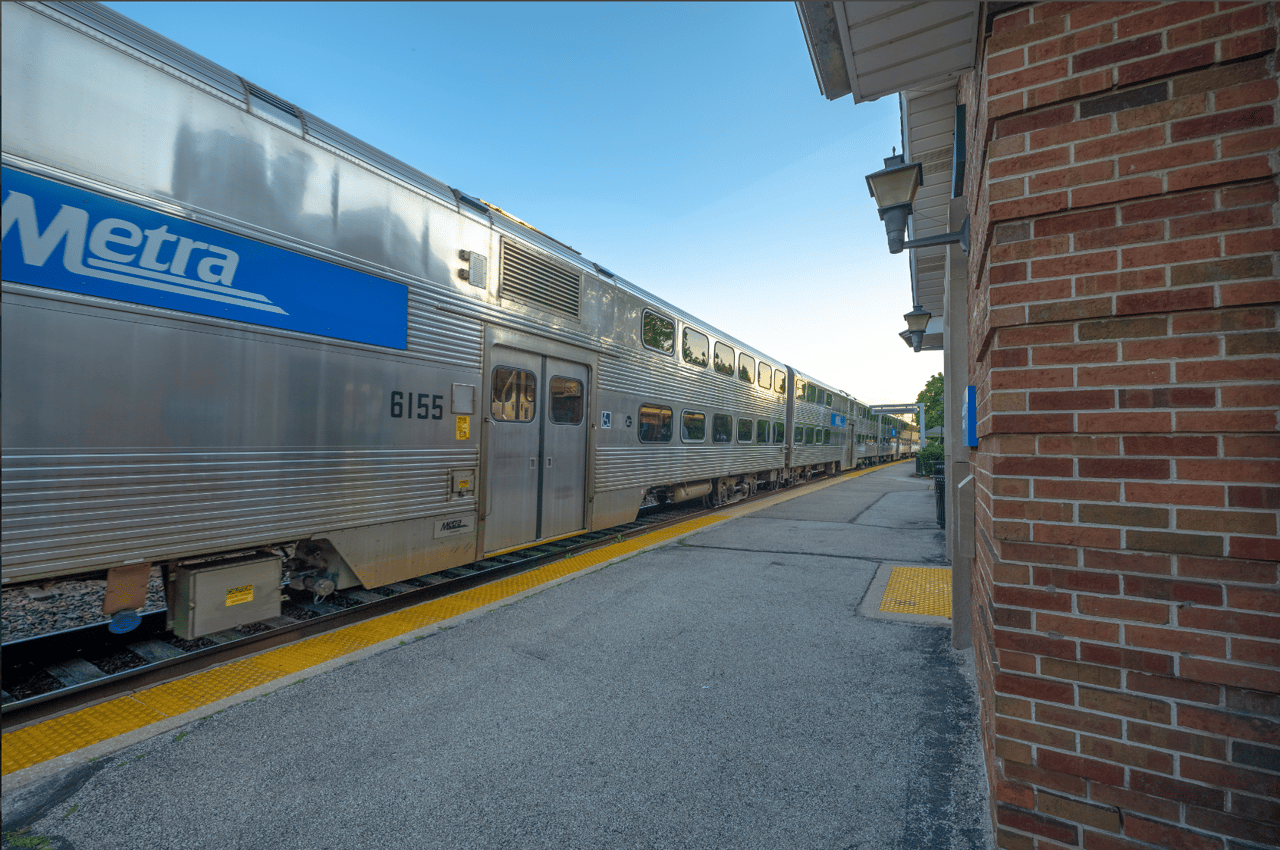
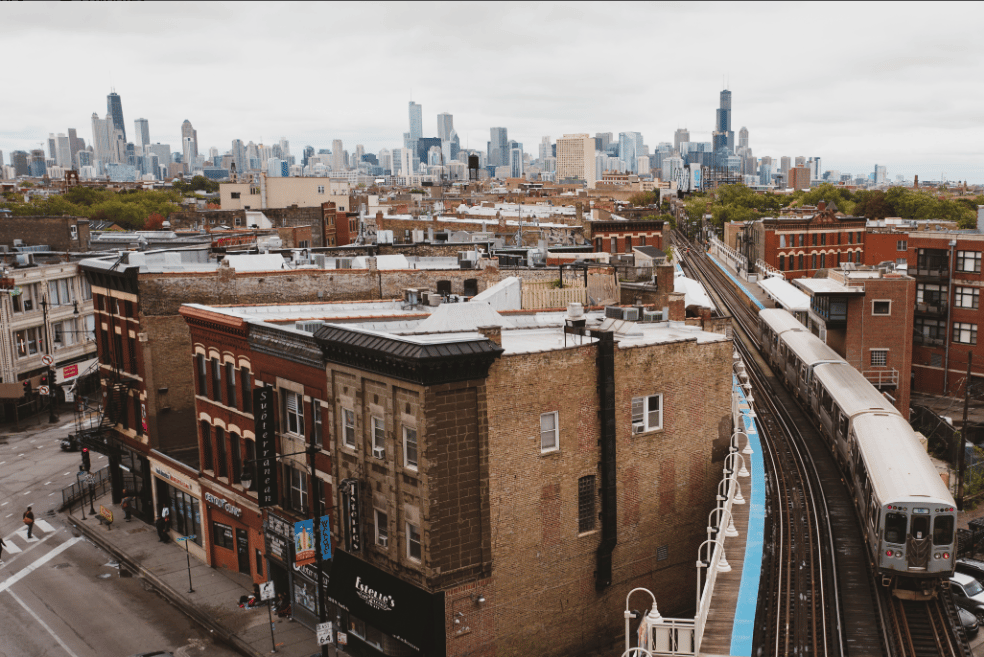
Just west of the city, Oak Park offers architecture that is nationally recognized (the largest concentration of Frank Lloyd Wright-designed buildings anywhere), mature tree-lined streets, and Green Line and Metra access directly into the Loop. It reads as a suburb but feels connected to the city in a way most suburbs do not.
Who it fits: Buyers who want character, walkability, and a strong sense of community without a long commute. Families drawn to a village that values architecture and design. Buyers who love vintage homes and want to be somewhere those homes are celebrated rather than torn down.
What to know before you buy: Property taxes in Oak Park are notably higher than in many comparable communities. That is the tradeoff for the village's services and school investment, and it is worth modeling into your carrying cost before you commit. Vintage homes also carry vintage maintenance realities, so budget for ongoing capital improvements as part of ownership.
For Suburban Space with Strong Connectivity: Elmhurst
Elmhurst gives you a real downtown, Metra access into the city, and the space that comes with moving farther out, without the isolation that some suburbs bring. It has become a strong option for buyers who want suburban room without cutting themselves off from the city.
Who it fits: Families outgrowing city condos who still want a walkable downtown. Buyers commuting into the Loop who want a real train option. Anyone who wants square footage and a yard but is not ready to be forty-five minutes from everything.
What to know before you buy: Elmhurst's downtown proximity is a genuine premium, and homes closest to the train and the downtown core price accordingly. Farther out, the value equation shifts. Decide early whether walkability to downtown is part of what you are buying, because it drives your price band more than square footage does.
For Investment and Development Potential: Fulton Market / West Loop Corridor
The Fulton Market side of the West Loop is one of the most active development corridors in the country. Corporate headquarters, hotels, restaurants, and mixed-use residential projects have transformed the area over the past decade, and demand has kept pace with supply so far.
Who it fits: Buyers thinking about long-term value alongside daily use. Investors tracking urban corridors with sustained institutional interest. Professionals working in the corridor who want to be walking distance to the office.
What to know before you buy: New construction dominates this market, which means comparing buildings, developers, and delivery timelines matters as much as comparing units. Assessments and taxes on new construction can shift meaningfully in the first few years of ownership, and rental restrictions vary by building. If you are buying with an investment lens, get the specifics on both before you commit.
The Best Neighborhood Is Personal
None of this is meant to hand you the answer. It is meant to help you ask better questions.
The best neighborhood for you depends on five things, in roughly this order: your lifestyle (how you actually spend your evenings and weekends), your commute, your budget, the property type you want, and your long-term goals. When those five line up, the shortlist usually narrows to two or three neighborhoods, and touring makes the final call.
If you are trying to figure out which neighborhood fits your version of that equation, that is exactly the conversation my team is built for. We work across the city and the suburbs, which means we can help you compare options that most agents cannot cover with equal expertise.
Frequently Asked Questions
What is the best Chicago neighborhood for families? It depends on whether you want city or suburban character. Lakeview and Lincoln Park draw families who want to stay in the city. Oak Park and Elmhurst are strong picks for families who want more space with strong connectivity. Schools, parks, and commute drive the final choice.
Which Chicago neighborhood has the best restaurants? The West Loop leads the city for acclaimed dining, particularly the Randolph Street corridor. Logan Square, Wicker Park, and Lakeview each have their own strong independent restaurant scenes with distinct character.
What are the best Chicago neighborhoods for investment potential? The Fulton Market / West Loop corridor continues to draw significant institutional investment and development. Other corridors worth watching depend on your time horizon, risk tolerance, and whether you want appreciation, cash flow, or both. A specific investment analysis requires your goals as inputs, and I am happy to build one.
Should I buy in the city or the suburbs? This deserves its own conversation, and I have written a full playbook on the city-to-suburbs move for buyers weighing exactly that question. The right answer depends on your family stage, commute, schools, and how you want to spend your time.
Scott Ottenheimer is a licensed managing broker and leads Ottenheimer Group at Compass, with offices in Lincoln Park, Glenview, and Winnetka. Trying to figure out which Chicago neighborhood fits your lifestyle? Contact us or start your search.